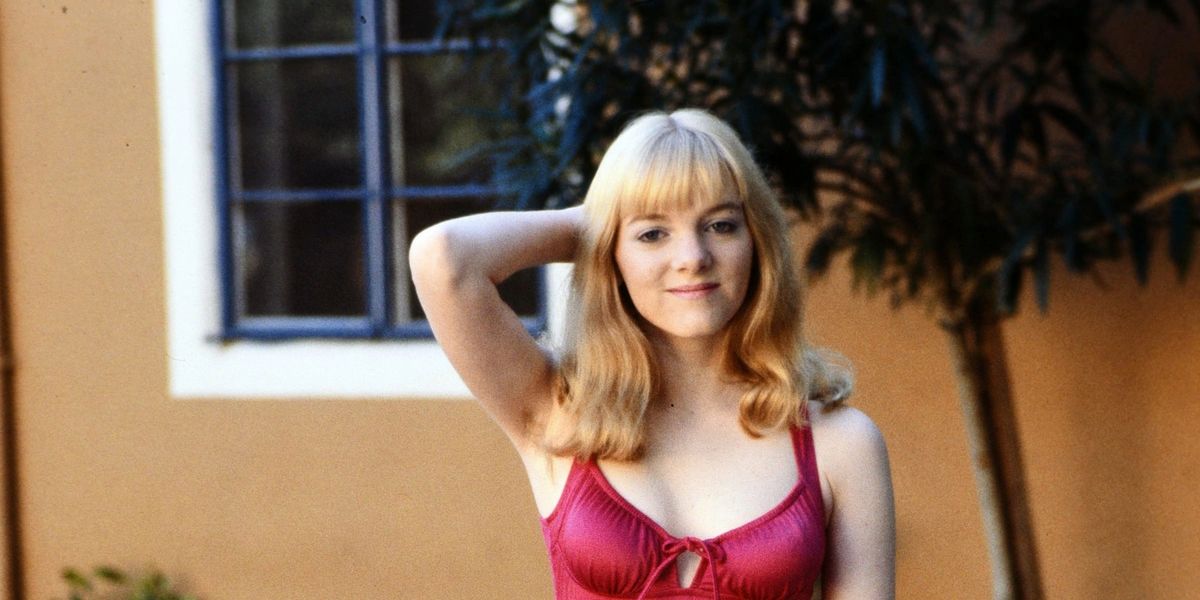
Mary Beth Hurt | Source: Getty Images
Remembering Mary Beth Hurt, 'The World According to Garp' Star: Her Transformation in 20+ Photos

Mar 30, 2026 - 08:52 A.M.
Behind the polished performances and prestige credits was a woman who quietly built one of the most distinctive careers of her era, and then lived an even more poignant final act far from Hollywood noise.
Advertisement
At first glance, Mary Beth Hurt's story looks like a classic Hollywood arc: acclaimed performances and Broadway prestige. But the most revealing chapter of her transformation came after the applause quieted, and it says everything about who she really was.
Scroll to the very end to see the transformation photos!
For years, Hurt was the kind of actress audiences instantly recognized, even if she never seemed especially interested in the machinery of stardom. That, honestly, may be part of what made her so fascinating.
The heartbreaking news of Hurt's death was first shared by her daughter, Molly. Instead of leading with credits in the emotional statement she shared, Molly led with character. She revealed:
"Yesterday morning we lost my mom, Mary Beth, to Alzheimer's after a decade long battle with the disease. She was an actress, a wife, a sister, a mother, an aunt, a friend, and she took on all those rolls with grace and a kind ferocity. Although we're grieving there is some comfort in knowing she is no longer suffering and is reunited with her sisters in peace [sic]."
According to The Hollywood Reporter, Hurt died at 79 on Saturday, March 28, 2026, at an assisted living facility in Jersey City, New Jersey. Her husband, Filmmaker Paul Schrader, said she had been diagnosed with Alzheimer's disease in 2015 and had until recently been living in another facility in Manhattan, with him in another apartment in the building.
Advertisement
That stark final detail lands with unusual force. For a woman whose screen image was so often poised and emotionally intricate, the closing years were marked by a deeply private, decade-long battle far from the spotlight.
And yet, to look back at Hurt's life is to watch a transformation that was never just physical… It was artistic, emotional, and, in the end, profoundly human.
Born Mary Beth Supinger in Marshalltown, Iowa, on September 26, 1946, Hurt's path to becoming one of the great supporting actresses of her generation began far from red carpets… She grew up in a family that took theater seriously, and that early exposure clearly stuck.
One of the most irresistible details from her early life sounds almost too cinematic to be real: future Star Jean Seberg once babysat her. Hurt later brushed it off with charming Midwestern matter-of-factness, explaining that Seberg was simply "just a neighborhood kid."
From Iowa, Hurt moved toward serious training, studying drama at the University of Iowa before continuing graduate theater work at NYU's Tisch School of the Arts in 1969. It was there, in New York, that the foundation of her real artistic identity took shape.
She worked with The Questors in West London, performed with Joseph Papp's Public Theater, and made her Broadway debut in 1974 in "Love for Love."
Advertisement
Her Broadway résumé became astonishingly deep. Over the years, Hurt appeared 15 times on Broadway between 1974 and 2011, building the kind of career actors envy, and theater lovers never forget.
She earned three Tony nominations, including for "Trelawny of the 'Wells'" in 1976, "Crimes of the Heart" in 1982, and "Benefactors" in 1986. She also won an Obie after originating the role of Meg in the Manhattan Theatre Club's off-Broadway production of "Crimes of the Heart."
Her stage credits stretched from "The Rules of the Game," "The Member of the Wedding," "Secret Service," and "Boy Meets Girl" to "The Cherry Orchard," "The Misanthrope," "A Delicate Balance," "Top Girls," and "The House of Blue Leaves."
Her feature debut came in Woody Allen's 1978 drama "Interiors," where she played Joey, the youngest daughter in a fractured family. It was her first movie, and yet she held her own in a powerhouse cast.
Vincent Canby of The New York Times praised her as "very appealing" in the role, and it was easy to see why, as Hurt had a way of making emotional confusion look achingly real, never theatrical for the sake of it.
Then came "Chilly Scenes of Winter" in 1979, where she played the emotionally distant obsession of John Heard's character.
Advertisement
But for many fans, her defining big-screen turn remains Helen Holm in 1982's "The World According to Garp." Opposite Robin Williams, Hurt made Holm smart, contained, wounded, and unforgettable, not merely the wife in Garp's orbit, but a force all her own.
In "Parents," she played a 1950s mother whose eerie behavior leaves her son wondering whether his parents are cannibals, while in "Six Degrees of Separation," she slipped perfectly into the skin of a New York socialite caught in a glamorous deception.
She also brought a sophisticated edge to James Ivory's "Slaves of New York." Later, she appeared in films including "A Change of Seasons," "D.A.R.Y.L.," Martin Scorsese's "The Age of Innocence," "Bringing Out the Dead," "The Family Man," "Lady in the Water," "The Dead Girl," "Untraceable," and "Change in the Air."
Her connection with Schrader was personal and professional. After they married in Chicago in August 1983, Hurt went on to appear in four films he directed.
On television, she starred in NBC's "Tattinger's" and later delivered a memorable guest turn with Henry Winkler on "Law & Order: SVU."
For someone with that résumé, Hurt could have leaned harder into celebrity, but she simply did not seem interested. In fact, one of the most revealing things she ever said about acting was that she preferred secondary roles. Hurt admitted she had never been extremely comfortable playing the lead and found supporting parts more interesting.
Advertisement
That confession now feels like a clue to her mystique: Hurt was not trying to be the loudest person in the room; she was trying to make the room more truthful.
She also once explained that she never felt "very beautiful, or incredibly smart or witty," so she looked for the odd, specific, idiosyncratic details in a character.
In 1989, Hurt offered an unusually candid look at her offstage life in a New York Times interview. What emerges is not a diva profile, but the portrait of a working mother trying to hold everything together with wit, fatigue, and honesty.
She recalled those impossible nights when "the kids both have the flu," the babysitter cancels, her husband is away making a movie, the dog needs walking, and she would wonder, "What do I need this for?"
At the time, Hurt and Schrader, with whom she remained for decades, were raising their two young children, Molly and Sam. She spoke glowingly about family life, saying, "Paul and the kids are the best thing that ever happened to me."
A 2023 Curbed profile revealed how Schrader cared for Hurt after her Alzheimer's diagnosis. At first, he quietly looked after her in the Putnam County home where they had lived for years, but eventually the situation became too difficult to manage there.
Advertisement
The profile makes clear that this was not a short or simple decline, as Hurt had been living with Alzheimer's for years, and the care, as Schrader put it, "needed to escalate."
He admitted he had reached the point of realizing, "we're not gonna be able to take care of her anymore," and had to start asking, "Where's a good place?" Schrader was also dealing with serious health issues of his own, including heart trouble, long COVID, and bronchitis.
So Hurt moved into Coterie in January 2023, and Schrader arrived a few weeks later. Almost every day, he said, he would wake up, work for a while, and then take the elevator down to the sixth floor to see her.
Hurt lived on the Memory Care floor, a space designed for residents with cognitive impairment. The hallways were arranged in a circle so that anyone who forgot where they were headed could keep moving safely, drifting past living areas, a small café, and rows of studio apartments.
Residents sometimes forgot their room numbers, so each apartment had an illuminated glass box where family members could place keepsakes. Outside Hurt's room, Schrader filled hers with pieces of the life she had built.
Some days, Schrader brought her up to the main restaurant. Other days, he stayed with her in Memory Care, reading beside her or playing a game. Friends stopped by, too, including Glenn Close.
Advertisement
And then there is perhaps the most surprising line in the whole Curbed story: Asked whether he would have moved there without the situation with his wife, Schrader said, "No." But he then added, "Will I leave if she dies? No. I like it."
Read in full context, it feels less like distance and more like a man trying to survive an impossible chapter by building a life around it.
And here is where this story's title really starts to resonate: Hurt's "transformation" was never only about the visible passage from ingénue to character actress to elder stateswoman of stage and screen; it was about a woman who moved from ambitious young performer to revered ensemble artist, from recognizable screen presence to intensely private family anchor.
Then, in the final act, she became the center of a story about care, memory, devotion, and loss. From luminous early roles to her final public images, the photos ahead trace a transformation that is as striking as it is deeply moving. Take a look below:
The '70s

Mary Beth Hurt and Diane Keaton stand outdoors in heavy winter coats, smiling in a stark scene from "Interiors" in 1978.
Advertisement

Mary Beth Hurt faces John Heard across a small diner table in "Head Over Heels" in 1979, wearing a casual layered outfit. The scene captures a tense yet playful moment as Hurt's character realizes Heard's character has started lunch without her.
The '80s

Kevin Kline and Mary Beth Hurt pose at the opening of "Crimes of the Heart" in New York City in 1981. Kline wears a tuxedo, while Hurt appears in a ruffled dress, marking a polished theater moment during the hit play's launch.
Advertisement

Mary Beth Hurt sits between Kevin Kline and another guest at the "Crimes of the Heart" opening-night party in 1981. In her puff-sleeved dress, Hurt looks bright and engaged as the cast celebrated the play's New York debut.

Mary Beth Hurt attends a Scott Newman Foundation benefit in Los Angeles in 1982, wearing a patterned dress with a flared hem and flats. Her relaxed pose and soft smile reflect her growing public presence at charity events in the early 1980s.

Mary Beth Hurt smiles in a close-up at the New York screening of "Plenty" in 1985. Wearing oversized round glasses and a satin jacket, Hurt shows off a sharper, more modern look during a mid-1980s red-carpet appearance.
Advertisement

Mary Beth Hurt and Paul Schrader attend the Tony Awards after-party in New York City, with Hurt in glasses and an elegant dark outfit. Their poised appearance captured the couple at a high-profile Broadway celebration.

Mary Beth Hurt and Paul Schrader pose together at the premiere of "Heartburn" in New York City in 1986. The couple dons casual ensembles for the event.

Bob Balaban and Mary Beth Hurt attend the "Parents" party in New York City in 1989. Hurt wears a dark fur coat and statement necklace, while Balaban stands beside her in a sleek suit.
Advertisement

Mary Beth Hurt poses at the 4th Annual Moving Picture Ball in Los Angeles in 1989. Wearing glasses, pearls, and a green patterned dress with puffed sleeves, Hurt looks polished and confident at the star-studded charity event.

Mary Beth Hurt poses at the NY Women in Film Awards in 1989 wearing an oversized dark suit, white blouse, and round glasses. Her tailored look reflected the understated sophistication she often brought to public appearances.
The '90s
Advertisement

Mary Beth Hurt stands beside Peter Horton in a still from "Thirtysomething" in 1990, wearing a high-necked white dress. Her stern expression suits the dramatic tone of the episode "I'm Nobody, Who Are You."

Mary Beth Hurt walks beside Paul Schrader at the 1992 "Light Sleeper" screening in New York City. In layered neutrals and glasses, Hurt brought a relaxed style to the film event.
- Aubrey Plaza Expecting First Child, Igniting Buzz over Mystery Partner — Photos
- Rosie O'Donnell's Striking New Look at 64 — What Changed, How She Lost 60 Lbs., and the One Decision That Surprised Even Her Fans
- Mary Mary's Tina Campbell Faces Divorce After Over Two Decades of Marriage Drama — Details and Photos

Mary Beth Hurt and Paul Schrader attend an amfAR benefit screening of "Suddenly Last Summer" in 1992. Hurt, in a dark fur coat and white heels, smiled softly beside Schrader at the New York event.
Advertisement
The 2000s

Mary Beth Hurt arrives at the 50th Anniversary Hallmark Hall of Fame event in 2001 wearing a black satin ensemble and oversized glasses. Her bright smile and sleek look gave the formal celebration a modern edge.

Mary Beth Hurt reads at Symphony Space in 2004 wearing a light, loose-fitting jacket and glasses. Leaning over the lectern, Hurt appears focused as she delivers a short story for the Selected Shorts event.
Advertisement

Mary Beth Hurt attends the premiere of "The Dead Girl" at AFI FEST 2006 in Hollywood. Wearing a structured black coat, drop earrings, and round glasses, Hurt looked polished on the red carpet.

Mary Beth Hurt smiles while greeting fans at the 2007 Film Independent Spirit Awards in Santa Monica. In a shiny dark jacket and round glasses, Hurt appeared cheerful and engaged at the event.

Mary Beth Hurt attends the "Top Girls" Broadway opening after-party in 2008 wearing a patterned dress and dark pendant necklace. Her soft smile and simple styling gave her a warm, elegant presence.
Advertisement
The 2010s

Mary Beth Hurt attends the 2010 Drama Desk Award nominees reception in New York City wearing a striped jacket, white top, and beaded necklace. Her bright smile and round glasses gave the look a lively, artistic feel.

Mary Beth Hurt attends the "Shinsai: Theaters for Japan" benefit at Cooper Union in 2012, wearing a loose gray tunic, layered pearls, and green-rimmed glasses. Her calm smile and understated look suited the charitable New York event.
Advertisement

Mary Beth Hurt poses with Paul Schrader at the 2019 Film Independent Spirit Awards in Los Angeles. In a black-and-white checked dress, pearls, and tinted glasses, Hurt looked bright and elegant beside her filmmaker husband.
At this time, we wish to extend our most heartfelt condolences to Schrader, his and Hurt's kids, and their entire family, loved ones, friends, community, fans, and all who knew and loved Hurt as they mourn this significant loss. We hope for their healing amid their time of grief. RIP, dear Hurt.
Advertisement

The information in this article is not intended or implied to be a substitute for professional medical advice, diagnosis or treatment. All content, including text, and images contained on ondoho.com, or available through ondoho.com is for general information purposes only. ondoho.com does not take responsibility for any action taken as a result of reading this article. Before undertaking any course of treatment please consult with your healthcare provider.