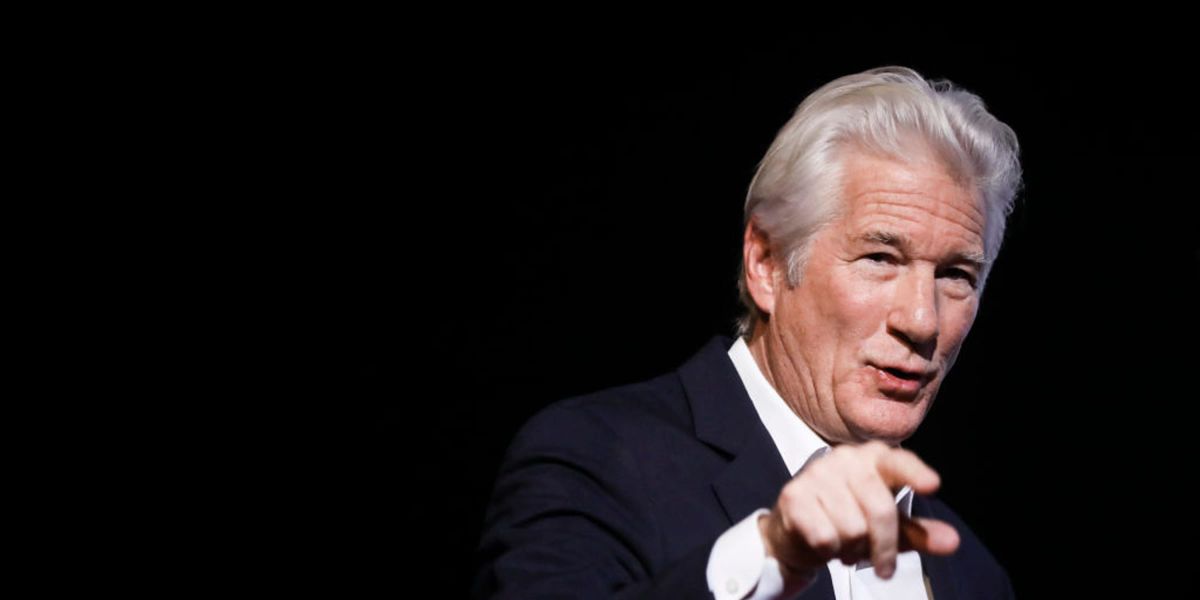
The R&B legend dies at 69. | Source: Getty Images
Legendary 1980s R&B Voice Dies Just Days After His Birthday — Family Says He 'Went Home to Rest'

Oct 07, 2026 - 10:01 A.M.
A legendary R&B voice has died just days after celebrating his 69th birthday, leaving behind a catalog that helped define romantic 1980s soul. But while his family has confirmed his death, one major detail about what happened to him remains undisclosed.
Advertisement
The singer died on October 5, 2026, according to reports, just days after marking another birthday. His family announced his passing online, remembering an artist whose music became part of countless love stories, celebrations, and treasured memories.

In 1985, the R&B soul singer leaned against the back of a chair for a portrait. His family later remembered him as a kind and generous man who had “gone home to rest” just days after his 69th birthday. | Source: Getty Images
His Family Said He Had 'Gone Home to Rest'
In their Instagram announcement, the family said their beloved singer had "gone home to rest" the previous night. They described him as more than a legendary voice, remembering him as a kind and generous man who deeply loved his fans, family, friends, and music.

In 1980, the R&B soul singer posed for a portrait. The legendary R&B voice has died just days after celebrating his 69th birthday, leaving behind a catalog that helped define romantic 1980s soul. | Source: Getty Images
Advertisement
Their statement focused on the bond he had built with his audience over several decades and the songs that became part of their lives. "To everyone who ever sang along, danced, or felt something when Freddie took the stage: thank you. You were family to him, and he carried your love with him always. 🕊️"

In 2019, the R&B soul singer performed onstage during a concert in Mableton, Georgia. His music had become part of his fans’ lives, with his family later thanking everyone who had “sang along, danced, or felt something” when he took the stage. | Source: Getty Images
They also asked fans to keep his family, friends, and loved ones in their prayers and said they would share details about arrangements and ways to honor his legacy in the coming days. "Rest in peace, Freddie. Your legacy and your voice will live on forever. 🙏🏾❤️," the statement concluded.
The singer behind the family's heartbreaking announcement was Freddie Jackson, the Harlem-born artist whose smooth, romantic voice helped define the sound of mid-1980s R&B.
Advertisement
His Final Birthday Message Came Just Days Earlier
The timing of Jackson's death makes his final birthday post particularly poignant. Just days before his passing, the singer celebrated turning 69 with a short message thanking fans for the love they had continued to show him throughout his career.
Jackson wrote, "69 years! Thank you for all the love! #happybirthday #freddiejackson." in his birthday post. At the time, it was simply a birthday thank-you. Now, coming so shortly before his death, it stands as one of the final public glimpses of Jackson's life.
Advertisement
There was no indication in the post that anything was about to change. Jackson was simply marking another year and acknowledging the people who had stayed connected to his music for decades. Then, only days later, his family announced that he was gone.
What Happened to Him Was Still Unclear
The circumstances surrounding Jackson's death remain limited based on what his family has shared publicly. The family did not disclose an official cause of death, and the supplied reports do not establish what caused him to die.
That unanswered question is particularly notable because Jackson had publicly discussed a serious health battle in the years before his death.
Advertisement
He Had Revealed a Kidney Disease Diagnosis in 2024
In September 2024, Jackson revealed that he had been diagnosed with kidney disease and announced a partnership with the National Kidney Foundation to raise awareness about kidney health. In his 2024 Instagram announcement, Jackson described the diagnosis as deeply personal and acknowledged that the journey had been challenging.
"I have been diagnosed with kidney disease. This journey has had its challenges, but I've decided to face it with openness and resilience."

In September 2024, Freddie Jackson revealed his kidney disease diagnosis and announced his partnership with the National Kidney Foundation to raise awareness about kidney health. | Source: Instagram/mrfreddiejackson and nationalkidneyfoundation
Jackson said he wanted to turn his personal experience into an opportunity to help others affected by kidney disease. "Your support has always meant the world to me. As I take this step, I'm turning my personal experience into a platform for greater understanding and advocacy."
Advertisement
He also said he was grateful for the support of his friends, manager, music family and fans as he faced the diagnosis. The health revelation came after people had noticed that Jackson appeared to have difficulty performing at the St. Kitts Music Festival in July 2024. Still, his family has not said whether kidney disease played any role in his death.

In 2024, Freddie Jackson spoke openly about his kidney disease diagnosis and his hope of using his experience to help others. He also thanked his friends, manager, music family, and fans for supporting him through the journey. | Source: Instagram/mrfreddiejackson and nationalkidneyfoundation
The Kidney Foundation Remembered His Courage
Following Jackson's death, the National Kidney Foundation paid tribute to him and recognized the way he had used his diagnosis to bring attention to the disease. According to NBC News, the foundation said it was deeply saddened to learn of his death and praised his courage during his health battle.
Advertisement
"His battle with kidney disease touched many lives, and his courage will not be forgotten," the foundation said in a social media statement. The foundation's tribute adds another layer to Jackson's final years, but it does not answer the question his family has left open: what caused his death?
With that question still unanswered, Jackson's life and the unusual details behind the man who became one of R&B's most recognizable voices take on even more significance.
Advertisement
He Never Had Children – And He Had a Reason
Despite spending much of his career singing about love, relationships, and family, Jackson never had children. The detail emerged in a revealing interview with Soul and Funk Music, when he discussed his song "My Family" and the responsibilities that come with parenthood.
Jackson spoke candidly about growing up in Harlem and knowing what it meant to come from a broken home. "I know what a broken home is about. I know what it's like to be brought up with mommy being mommy and daddy."
He said having a child was a major responsibility and required a person to dedicate significant time to raising one. "That's one of the reasons I probably don't have a child myself because you have to practice what you preach."
Jackson acknowledged that his own life could be complicated and that he believed he needed to resolve some personal matters before taking on that responsibility.
"Sometimes my life is very confusing, and before I embark on that there are some things I have to fix with Freddie." It was an unusually personal admission from a singer whose career was so closely associated with romantic music.
Advertisement
Away From the Spotlight, He Had a Quiet Pennsylvania Retreat
Advertisement
Jackson also maintained a private retreat in Pennsylvania, far removed from the noise and demands of New York. At the time of his 1994 interview, he said he had owned the property for six years while maintaining his home in New York. The contrast between the two places clearly mattered to him. "I love being in the Pokanose. I love the woods, the deer, my lake, my horses."
Jackson said escaping the city helped him find a sense of calm that was difficult to achieve in New York. "Getting away from it keeps me at peace with myself."
It was a revealing glimpse of the man away from the stage — someone who could command huge audiences but also valued the quiet of the woods, his horses and his lake.
Before the Fame, He Was a Harlem Gospel Singer
Long before Jackson became the voice behind some of the biggest love songs of the 1980s, his musical journey began in Harlem. He learned to sing gospel at White Rock Baptist Church, where he met Paul Laurence, the songwriter and producer who would become one of the most important collaborators of his career.
Advertisement
After graduating from school, Jackson joined Laurence's Laurence-Jones Ensemble and performed at New York nightclubs. In the late 1970s, he moved to the West Coast and became the frontman of the funk group Mystic Merlin, which released three albums between 1980 and 1982.
After returning to New York, Jackson sang on demo recordings of Laurence's compositions and became a backup singer for Melba Moore after she saw him perform at a club in 1981. But the road to solo stardom was still ahead.
He Was Once a Word Processor Operator
In his interview with Soul and Funk Music, Jackson recalled working full-time as a word processor operator while trying to break into the music industry. It was Laurence who encouraged him to leave the desk behind and pursue his talent. Jackson remembered taking his demo cassette to people during his lunch hour and sometimes having doors slammed in his face.
Advertisement
The struggle happened during the disco era, when Jackson felt the industry was not looking for a singer with his style. "I was so dismayed with the industry because I was going around during my lunch hour taking my demo cassette for people to hear and sometimes getting the door slammed in my face," he recalled.
"I sang too much for disco records. They didn't need singers, just a good beat and a half way decent singer." Then Hush Productions gave him the opportunity that would change the trajectory of his career.
His First Album Was Practically a Birthday Gift
Jackson said he did not have a record deal when he recorded Rock Me Tonight. Instead, Hush Productions gave him studio time as a birthday gift, fronted him money to record the project, and eventually sold the finished album to Capitol Records.
The gamble paid off. Released in 1985, Rock Me Tonight became a platinum-selling breakthrough and sold two million copies, according to Jackson's later interview.
The album would establish him as one of the defining voices of romantic R&B.
Advertisement
The Album That Made Him an R&B Star
Rock Me Tonight produced back-to-back R&B chart-toppers with its title track and You Are My Lady. Both reached No. 1 on the U.S. R&B chart. The album ultimately produced four Top 10 R&B singles, with Love Is Just a Touch Away reaching No. 9 and He'll Never Love You peaking at No. 8.
It also topped the R&B Albums chart for 14 nonconsecutive weeks and reached the Top 10 on the Billboard 200. You Are My Lady became Jackson's biggest pop crossover hit, reaching No. 12 on the Billboard Hot 100.
Jackson's You Are My Lady remains one of the clearest examples of the rich, romantic sound that made him famous. The success of Rock Me Tonight earned Jackson a 1986 Grammy nomination for Best New Artist. He also received a nomination for Best Male R&B Vocal Performance for You Are My Lady, although he did not win either category.
The Hits Kept Coming
Jackson's breakthrough was followed by another major success. His second album, Just Like the First Time, also went platinum and produced three more No. 1 R&B singles: Tasty Love, Have You Ever Loved Somebody and Jam Tonight. Other songs, including Hey Lover, Nice 'N' Slow, Do Me Again and Love Me Down, further established him as a fixture of the quiet-storm era.
Advertisement
His duet with Melba Moore, A Little Bit More, also reached No. 1 on the R&B chart. By then, Jackson had accumulated 10 No. 1 R&B singles. In 1988, he received an American Music Award for Nice N Slow.
Advertisement
His Music Found a Second Life in Hip-Hop
Jackson's influence did not end when the peak of his original chart run faded. His music later became source material for hip-hop artists who recognized that his smooth melodies could take on a different character behind drums and rhymes. Love Is Just a Touch Away was reworked by AZ on the Erick Sermon remix of Gimme Yours.
Mack 10 and Gerald Levert also used it for Money's Just a Touch Away, while Snoop Dogg and October London brought the song into another generation with their 2022 track Touch Away. Another Jackson recording, Have You Ever Loved Somebody, later appeared in music by artists including DMX and Nipsey Hussle.
His catalog therefore traveled well beyond the quiet-storm radio audience that first embraced him, giving his music a second life across different generations and styles of hip-hop.
Advertisement
Wembley Stadium Made Him Nervous
Jackson had already become a major star when he took part in the Mandela 70th Anniversary concert at Wembley Stadium. But even an artist accustomed to large stages could still be overwhelmed by the company around him. The lineup included Joe Cocker, Natalie Cole, Whitney Houston, Stevie Wonder and George Michael.
Jackson admitted that simply seeing those names had made him nervous. "I mean, I looked at the names that would be appearing - Joe Cocker, Natalie Cole, Whitney Houston, Stevie Wonder, George Michael and I got nervous. I mean, I was kinda doin' it in my pants!"
He described stepping onto the Wembley stage as an unreal experience and said it finally gave him a sense of what performers such as Michael Jackson and Elton John must feel. For an artist who had already performed for tens of thousands of people, the admission offered a surprisingly human glimpse of the nerves behind the glamour.
He Preferred Intimate Shows to Arenas
Jackson had performed before enormous audiences, including an estimated 30,000 to 40,000 people at Budweiser Superfest. Yet he admitted that he did not particularly enjoy performing at such a distance from the people who had come to hear him. "As much as I like the money for those things, I dislike the lack of intimacy."
Advertisement
He preferred theaters and believed his music worked better in an intimate environment. That philosophy was reflected in a 1989 interview with The New York Times, which described Jackson as "one of black pop's most elegant performers, a singer who can turn a heartbreak ballad into a world view."
Jackson had an equally memorable way of explaining his relationship with an audience. "My music is for people who like to hold hands in concert."
Advertisement
He Wanted His Music to Bring People Together
Jackson's music was frequently associated with romance, but he believed its emotional impact could reach beyond romantic relationships. Speaking to The New York Times, he connected his music to the racial and social tensions of the period. "If people could diminish some of their hate, the chaos and trouble in life wouldn’t be so strong," he said.
"At my shows, I see people who don’t know each other end up talking to each other." For Jackson, a concert was therefore more than an opportunity to sing his biggest songs.
He viewed it as a chance to create a shared experience among people who might otherwise have nothing to do with one another.
He Refused to Chase Every New Trend
As the 1980s gave way to the 1990s, Jackson watched the music industry change around him. He eventually left Capitol Records for RCA and began working with younger producers while maintaining his longtime creative relationship with Laurence. But Jackson had no interest in pretending to be younger or changing his identity simply to fit a new musical trend.
"I'm not trying to act like I'm 16 at thirty something years old, wearing rap clothes! I'm not regressing. I want to go on." He also criticized what he considered an increasingly repetitive music industry and argued that record companies needed to develop artists for long-term careers.
- Hayden Panettiere Opened Up About Her Brother Jansen Years After His Sudden Loss — and the Guilt She Carried
- Gypsy Rose Blanchard Sent Ken Urker a Two-Word Text on His Birthday — Hours Later, He Was Found Dead
- Kelly Ripa and Mark Consuelos's Daughter Lola Posts Vacation Photo with Alleged Boyfriend and a Flirty Caption — Her Mom's Reaction Says It All
Advertisement
At the same time, he praised groups such as Boyz II Men and said artists had to understand what they wanted audiences to accept them for. "You have to bring people around to what you do and what they want to accept you for."
Advertisement
His Partnership With Paul Laurence Lasted Decades
Jackson's relationship with Laurence stretched back to their days singing together in church. By the time of the 1994 interview, Jackson said they had been friends for 25 years.
Their creative partnership had not always been easy. "He'd really drill me in the studio, and sometimes it was a bit intimidating, especially when we did the first few albums," Jackson recalled.
Jackson said Laurence sometimes drove him crazy, but their relationship became more relaxed as he established himself and gained experience. Their partnership ultimately became one of the foundations of Jackson's career.
He Kept Recording and Performing
Leaving Capitol did not mean Jackson left the music business behind. After moving to RCA at the end of 1993, he continued recording for independent labels, releasing projects including For You in 2010 and Love Signals in 2018.
He continued performing live and appeared onstage with artists including Jeffrey Osborne, Peabo Bryson, Melba Moore and Stephanie Mills. Jackson also moved beyond music.
In 1989, he appeared as a lounge singer on The Golden Girls and recorded Love Survives, a duet with Irene Cara, for the animated film All Dogs Go to Heaven. He also participated in King of New York. His music continued into the 2020s, with My First Love released in 2023.
Advertisement
A Voice That Refused to Fade
Advertisement
Jackson's career stretched from a Harlem church and a word processor's desk to platinum albums, No. 1 R&B singles, Grammy nominations, massive concert stages and a catalog that later generations of artists continued to revisit.
His music became part of the soundtrack to the era's romances, but his influence ultimately reached well beyond the slow-dance crowd that first embraced him.
Jackson once offered a simple explanation for how he believed an artist could maintain a lasting relationship with an audience. "The secret is to continue to be honest and real with my audience."
Now, his final public posts tell a much shorter story. First came a birthday message celebrating 69 years and thanking fans for their love. Then came his family's announcement that the legendary singer had "gone home to rest."
Advertisement
His family has not disclosed an official cause of death. But while the circumstances of his final days remain unanswered, the life he spent decades building is far easier to trace — from Harlem gospel to the biggest stages in the world, and from romantic R&B classics to hip-hop samples.
It was also the life of a man who never had children and a star who admitted that even Wembley Stadium could make him nervous. For generations of listeners, however, one thing remains certain: Freddie Jackson left behind a voice that refused to fade.
Advertisement

The information in this article is not intended or implied to be a substitute for professional medical advice, diagnosis or treatment. All content, including text, and images contained on ondoho.com, or available through ondoho.com is for general information purposes only. ondoho.com does not take responsibility for any action taken as a result of reading this article. Before undertaking any course of treatment please consult with your healthcare provider.